
Cupping therapy
Hands-On Cupping Therapy, Included in Your Physical Therapy
Cupping isn’t lying on a table with cups on your back while someone types notes. Your physical therapist uses static and dynamic cupping hands-on—moving the cups to target the fascia and get more glide in tight tissue—as one part of your plan, with no separate fee.
Prefer to talk? Call or text (574) 686-7313 (South Bend & Michiana) or (239) 399-5023 (Naples & Southwest Florida).
Serving South Bend & Michiana, Southwest Michigan, and Naples & Southwest Florida. Private-pay physical therapy.
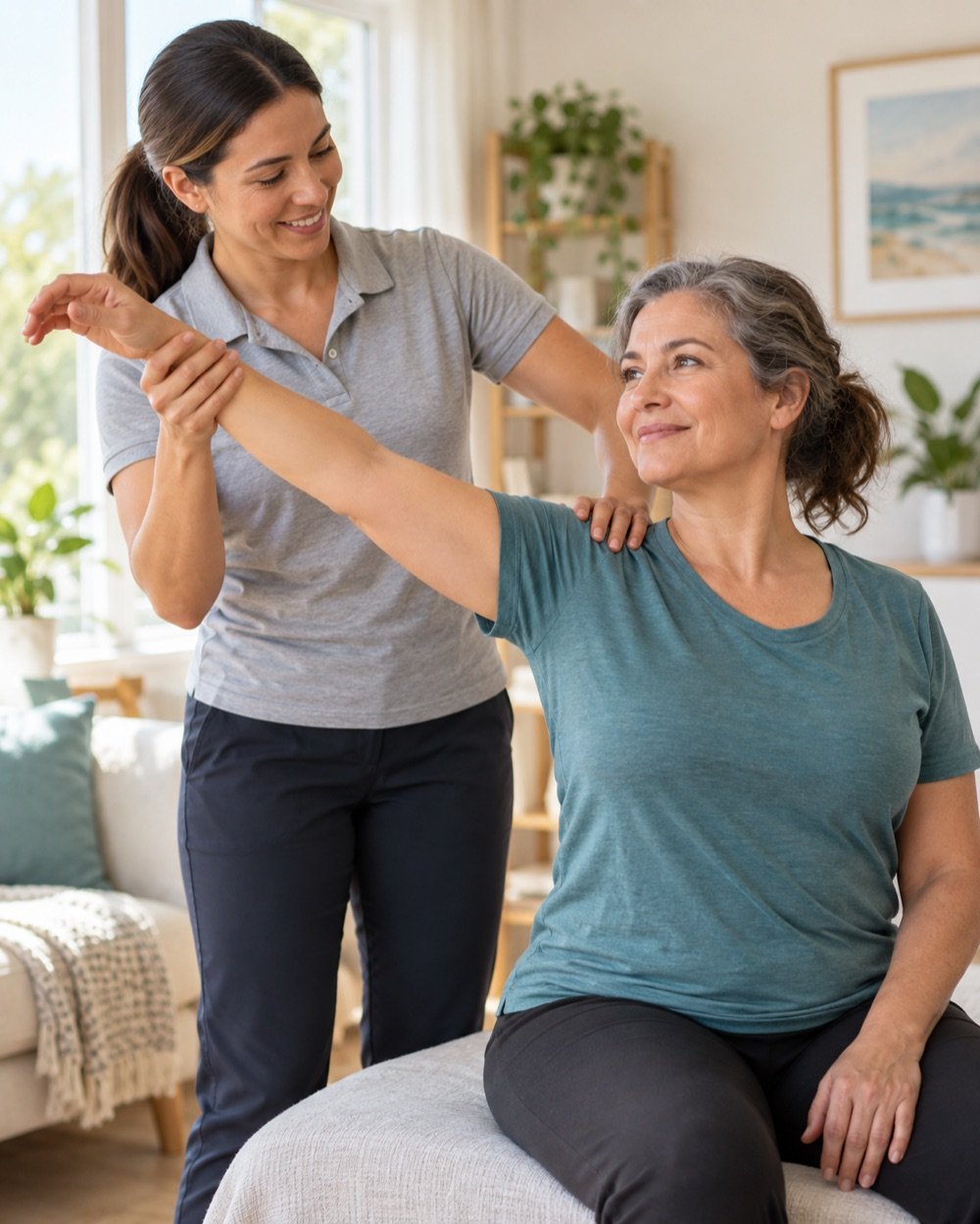
Cupping therapy
Cupping as Active, Hands-On Care
Cupping uses suction to lift and decompress the skin, fascia, and muscle underneath—the opposite of the pressure from massage or other hands-on techniques. How it’s applied makes the difference.
Static Cupping
Cups stay in place over a tight or tender area for a short time while your therapist works on the surrounding tissue.
Dynamic Cupping
Your therapist moves the cups along the tissue, targeting the fascia and getting more glide and movement through stiff, restricted areas.
Never a Hands-Off Treatment
You won’t be left on a table with cups on your back while your therapist types notes. Cupping happens during one-on-one, hands-on time.
Where it may help
Problems Cupping Is Often Part of Treating
Whether cupping fits depends on what your exam shows. It’s one tool within your plan, used alongside exercise and other hands-on care.
Neck & Upper Back
- Tight neck and shoulder muscles
- Stiffness between the shoulder blades
- Tension that builds with desk and screen work
Low Back & Hips
- Low back tightness and stiffness
- Glute and hip muscle tension
- See back & neck pain physical therapy
Shoulders & Arms
- Shoulder and upper-arm tightness
- Forearm tension from work, golf, or racquet sports
- Restricted tissue around a recovering shoulder
Legs & Active Recovery
- Hamstring, calf, and thigh tightness
- Tissue tension along the outer thigh
- Recovery support for golf, tennis, pickleball, and running

What to expect
How Cupping Fits Into a Visit
- It starts with your exam. Cupping is considered when your findings point to tight, restricted tissue it may help.
- We explain it first. What we would treat, why, what you may feel, and the marks it can leave. You decide whether to go ahead.
- During treatment. Most people feel a strong pulling or stretching sensation. Suction is adjusted to your comfort, and you can ask us to stop at any time.
- Afterward. Round marks are common where the cups were and usually fade over several days. We follow with movement or exercise so the change carries into how you move.
Safety
Tell Us Before Cupping If Any of These Apply
Cupping isn’t right for everyone or every area. Let your therapist know if you:
- Take a blood thinner or have a bleeding disorder
- Bruise easily or have fragile skin
- Have a rash, wound, or skin condition near the area
- Are pregnant or may be pregnant
- Have varicose veins or a history of blood clots
- Have an event coming up where marks would show
If cupping isn’t a good fit, your plan uses other hands-on care and exercise instead.
Included in your visit
Part of Your One-on-One Care
Cupping is performed wherever your visit happens: at home, at your club, or at your office. Your therapist brings the cups and supplies.
There is no separate fee. Cupping is part of your visit whenever it is clinically appropriate.
It can be combined with exercise, other hands-on care, and dry needling where dry needling is offered.

“From our first session together I could tell this would be a different experience. Not only did he take the time to go over my entire history, he tested my strengths and reflexes until he was able to zero in on my particular issues and devise a program to help me. For the first time, a physical therapist offered me a variety of treatments, including cupping and dry needling, as well as exercises tailored to my specific needs.”
Payment
Private Pay, Explained Up Front
ECPT is a private-pay practice, and payment is due at the time of service. We'll go over cost with you before your first visit, so there are no surprises.
Commercial Insurance
We provide an itemized invoice (often called a superbill) for patients with commercial insurance who wish to seek reimbursement through out-of-network benefits.
Medicare
ECPT is a private-pay practice and does not bill Medicare.
HSA and FSA
HSA and FSA cards can't be used for ECPT visits.
Questions
Questions About Cupping
What’s the difference between static and dynamic cupping?
With static cupping, the cups stay in one place for a short time. With dynamic cupping, your therapist moves the cups along the tissue to target the fascia and get more glide through restricted areas. Many visits use both.
Will cupping leave marks?
Often, yes. Round marks are common where the cups were placed and usually fade over several days. Let us know about any upcoming event where marks would show, and we can plan around it.
Does cupping hurt?
Most people feel a strong pulling or stretching sensation rather than pain. Suction is adjusted to your comfort, and we can stop at any time.
Is there an extra charge for cupping?
No. When it’s clinically appropriate, cupping is part of your visit, with no separate fee.
Do I have to have cupping?
No. It’s always your choice. If you’d rather not, your plan uses other hands-on care and exercise.
How long are visits?
Your first visit is a full 60 minutes, one-on-one with a Doctor of Physical Therapy. After that, visits run 45, 60, or 90 minutes, depending on your plan, goals, and availability.
Do I need a referral or prescription?
In many cases, you can begin physical therapy without a physician referral. However, depending on your medical history, surgery, diagnosis, insurance situation, or state-specific requirements, we may recommend or require coordination with your physician.
Do you bill insurance or Medicare?
ECPT is a private-pay practice and does not bill Medicare. For patients with commercial insurance, we provide an itemized invoice (often called a superbill) to submit for out-of-network reimbursement. Reimbursement depends on your plan.
Where do visits take place?
Your therapist comes to you—your home, office, private gym, senior living residence, or another appropriate private space—in South Bend & Michiana, Southwest Michigan, and Naples & Southwest Florida.
Where we provide this care
Wondering Whether Cupping Fits Your Plan?
Tell us what you’re feeling and where you’re located. Cupping is available in all three regions.
South Bend & Michiana
South Bend, Granger, Mishawaka, Notre Dame, Osceola, Elkhart, and nearby communities.
Call or text(574) 686-7313In-home PT in South Bend →Southwest Michigan
Niles, Edwardsburg, Cassopolis, and nearby communities.
Call or text(574) 686-7313In-home PT in Southwest Michigan →Naples & Southwest Florida
Naples, Bonita Springs, Estero, Fort Myers, and nearby communities.
Call or text(239) 399-5023In-home PT in Naples →Prefer to write? Use the form below, and a Doctor of Physical Therapy will personally follow up within 24 hours.
Start with a conversation.
This brief request helps us understand your needs before connecting. We’ll review your goals, confirm your location, and follow up to discuss next steps for private, in-home care.
Prefer to speak directly?
Call or text us at (574) 686-7313 for South Bend / Michiana or (239) 399-5023 for Naples / Southwest Florida.